The shoulder is the most mobile joint in the human body — and because of that mobility, it's also one of the most vulnerable. The shallow socket, the complex network of tendons and bursa, the four interconnected rotator cuff muscles — any of these can break down, and when they do, the pain is often persistent, layered, and resistant to simple solutions.
This is why single-therapy approaches so often disappoint. A heating pad only addresses circulation. A massager only addresses surface muscle tension. Pain medication only masks the signal. For shoulder pain to meaningfully improve, multiple mechanisms need to be addressed simultaneously — and that's the core principle behind the OptiJoint.
Published research in the Journal of Rehabilitation Medicine consistently shows that multi-modal therapy — combining thermal, mechanical, and neurological interventions — produces significantly better outcomes than single-therapy approaches for chronic shoulder conditions including rotator cuff disorders, impingement syndrome, and adhesive capsulitis.
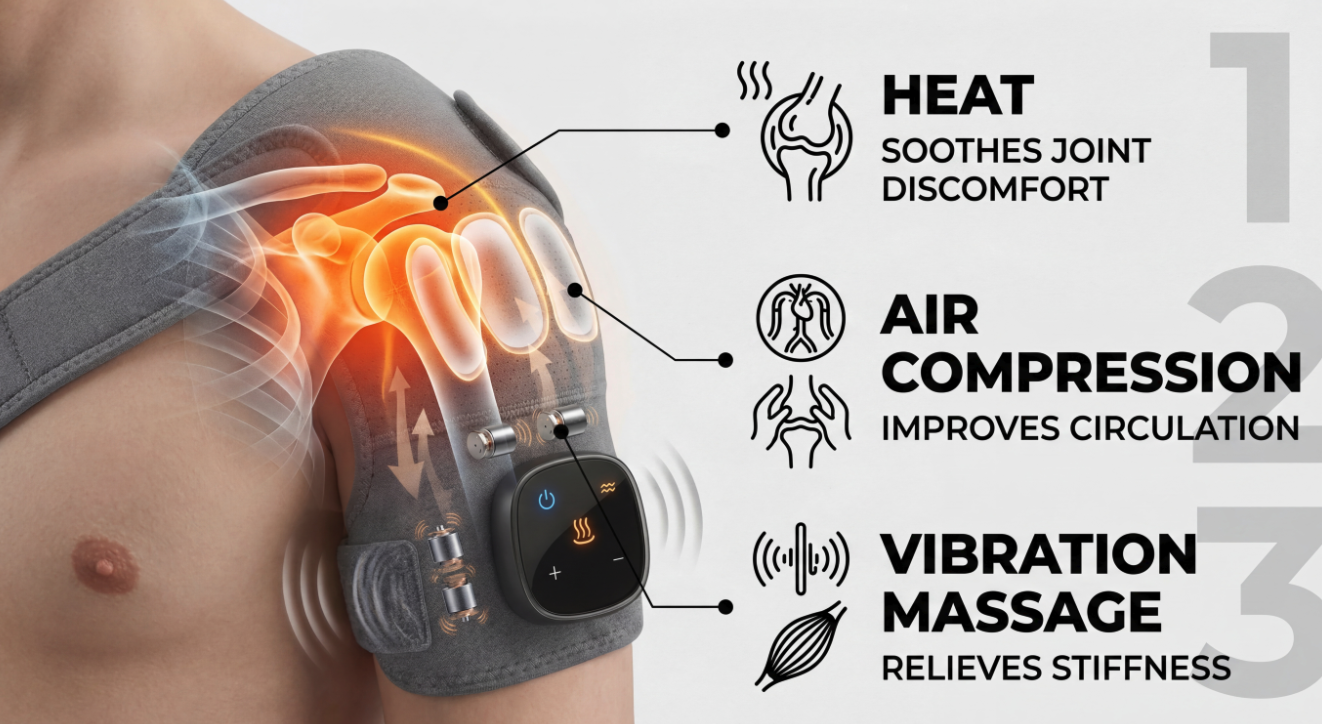
The Three Therapies — and Why Each Matters
Therapeutic Heat
Dilates blood vessels around the joint, increasing oxygen-rich blood flow by up to 40% and accelerating delivery of natural anti-inflammatory compounds to damaged tissue.
Air Compression
Rhythmic pneumatic pressure mimics the pumping action of healthy muscle contractions — flushing inflammatory waste products from the joint environment.
Vibration Massage
Activates mechanoreceptors in the joint capsule, triggering the body's gate-control pain mechanism and relaxing deep muscle spasm in the rotator cuff.
Conditions It's Designed to Address
Three years of frozen shoulder. PT twice a week for eight months. Two cortisone injections. Nothing got me past 50% range of motion. I added the OptiJoint to my routine and within three weeks I was reaching overhead again for the first time in years. I genuinely cried.
Key Features
The OptiJoint is a cordless, rechargeable wearable wrap with an ergonomic design that conforms to any shoulder size. Unlike generic heated wraps that simply sit near the joint, the adjustable strap system ensures the heat elements and compression chambers sit precisely over the joint — not two inches away from it. Independent controls for heat level, compression mode, and vibration intensity allow users to customize each session to their current needs. The breathable fabric makes it comfortable for extended wear, and the portable design means it can be used while reading, working, or traveling.